


24 May Maximise your solar system
Load shedding has been part of life in South Africa since 2007, and with the increasing severity and extent of these periods without power, scores of businesses and families have chosen to invest in solar power systems. According to Energy Monitor, there was an almost 350% increase in rooftop solar capacity in just over a year, between 2022 and 2023.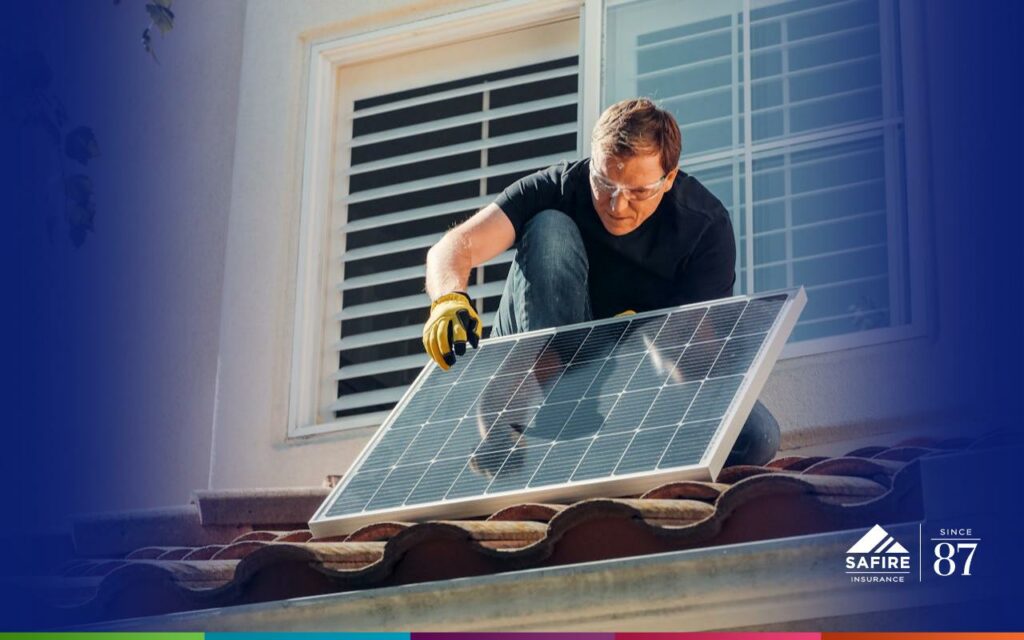
Changing to solar power is certainly an investment, and a sizeable one, so it makes sense to protect and care for your solar system to help extend its lifespan and keep it working at its best for as long as possible. In addition to adding your solar system to your insurance cover to ensure you are protected in the event of damage / losses requiring a claim, there are other steps to take…
Before you get started
It may be useful, if you can afford it, to get a professional energy audit conducted on your property so you can understand where and how much energy is being used, what can be done to limit this use, and to determine what size solar system is required to manage your average daily power requirements.
Roof mapping assesses the solar-power potential of your rooftop by measuring the suitable area where solar panels could be situated to determine how many panels will fit and how much power these will generate. You may want to ask a structural engineer if your roof is able to safely carry the weight of the solar panels.
Find out if you need to get approval to install a solar system from your municipality, neighbours or homeowners association.
It is vital to select an accredited and recommended contractor to install your solar system – there are lots of shady opportunists out there! Only a registered and suitably qualified electrician may install a solar system, so ensure that the electrician you are relying on meets these necessary criteria.
The South African Green Card is considered to be a good way to ensure that you have a professional you can trust as it requires that installers pass an extensive, intensive training programme, meet quality assurance standards, and have the necessary safety certifications.
Remember that you will need them to provide you with a Certificate of Compliance (CoC) to confirm that your system is safe for use and is compliant with all legal requirements once the installation has been done. Your insurer will need a copy of this CoC. Your solar system may also have to be registered with the local authority – your installer should be able to assist with the paperwork for this as well.
Protection from the elements and dirt
South Africa experiences extreme weather that includes violent thunderstorms, hail, high winds, and even snow and tornadoes. What can you do to keep your solar system safe from Mother Nature?
Solar panels are designed to cope with lightning strikes; however a direct strike could damage your system. During installation, ensure that adequate surge- and related protection is in place to protect the system as best it can.
Solar panels, because of their required exposed sun-catching positioning, may quickly accumulate fallen leaves, bird droppings, dust and natural grime. While cleaning them, check for damage, especially after a storm. Trim back overhanging trees and other vegetation that may add fallen leaves and could potentially drop sticks and dead branches on the panels, as well as casting shadows that affect the system’s performance and reduce its energy production.
Inspect all three elements of the system: the solar panels, batteries and inverters.
Solar panels: look for cracked panels and damaged cables.
Batteries may not need regular maintenance but they should be monitored to ensure that they are performing at optimal levels. Lithium-ion batteries are ideal for home solar systems due to their long lifespan, being able to complete about 5,000 to 6,000 cycles before degrading to about 80% of the original capacity, meaning that a battery can charge and discharge 5,000 to 6,000 times before degradation (around two to three years).
Lead-acid batteries, which generally manage 2,000 cycles before degradation, are suitable for an occasionally-used back-up system or as part of an off-grid system. Most quality batteries will carry a long-term warranty.
Similarly with inverters: clean and check them to see if the cooling fans need replacing. Batteries and inverters could last between five to ten years before needing to be replaced; solar panels last far longer – up to 25 years if you are lucky.
It’s a good idea to ask a professional to check your system on a regular basis, at least annually, as they will know what to look out for and could pick up issues before they become too serious (and costly to repair).
Protection from criminals
Criminals are always fast to sniff out demand for a commodity, and solar panels, batteries, inverters and generators are easy targets. While generators can be locked inside a cage to keep them safe, solar panels are more difficult to protect as caging them affects their efficiency.
Some installers recommend using metal brackets (anti-theft mounting systems) to keep them well-secured. Using less accessible areas of the roof for panels is another suggestion, or placing them where they cannot be seen from the street, as long it will not affect their ability to maximise the sun’s position during the day. Integrated alarm systems, movement sensors, dot security system, and CCTV surveillance are other safety measures to consider.
You should mark your equipment with your name, address and contact details so that if it is stolen and then recovered, it can quickly be returned to you. Keep a record, including a description of the elements forming the system such as the make, serial numbers etc to prove ownership if stolen items are found.